
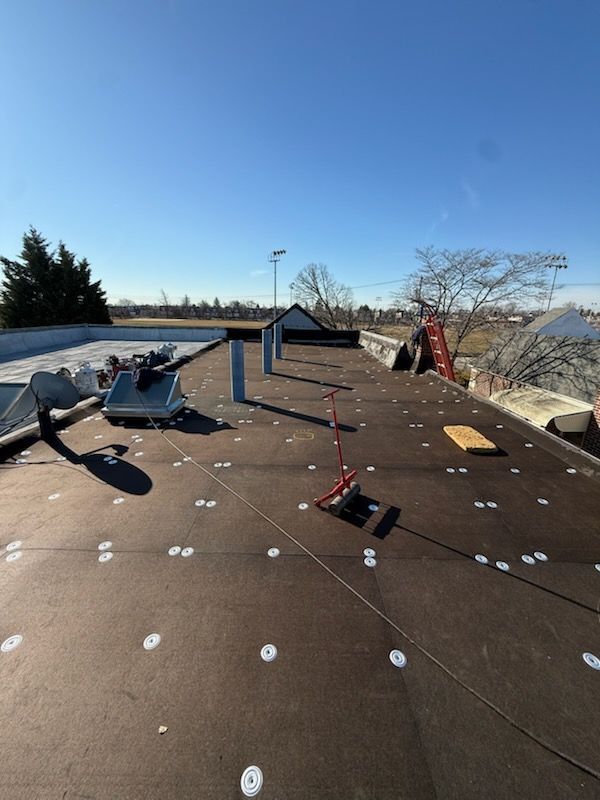
Low-Slope Systems That Handle Water Management
Flat Roofs in Philadelphia for ponding water, membrane blistering, and seam failures that lead to interior leaks and structural damage
Flat and low-slope roofing systems experience drainage challenges that pitched roofs avoid, making waterproofing integrity and proper slope design critical for long-term performance. Water that remains standing more than 48 hours after rainfall accelerates membrane deterioration, freezes into ice dams during winter months, and adds structural loading beyond design calculations. Fahey Roofing Siding, Doors, Inc provides flat roofing solutions for residential and commercial properties throughout Philadelphia where membrane failures cause ceiling damage, insulation saturation, and deck deterioration that compromise building structures. These installations require expertise in drainage patterns, flashing details, and waterproofing methods specific to horizontal and near-horizontal applications.
Flat roof service includes installing new membrane systems, repairing localized damage before it spreads, replacing deteriorated sections that have reached service life limits, and implementing drainage improvements that eliminate ponding conditions. Material options like EPDM rubber, TPO thermoplastic, modified bitumen, and built-up systems each offer different installation methods, seam techniques, and durability characteristics suited to specific building types and exposure conditions.
Request a flat roof evaluation to identify current drainage issues and membrane condition affecting your property's weather protection.
Why Drainage Design Determines Flat Roof Longevity
Proper flat roof installation creates positive drainage through tapered insulation, structural slope, or crickets that direct water toward scuppers, internal drains, or perimeter gutters. Philadelphia's weather patterns deliver both intense summer thunderstorms and prolonged winter precipitation that test drainage capacity and membrane adhesion. Membrane selection must account for thermal cycling between summer heat that softens materials and winter cold that makes them brittle.
After membrane installation completes, water sheets quickly off surfaces toward drainage points rather than collecting in depressions where evaporation becomes the only removal mechanism. Seams between membrane sections remain bonded through temperature cycles that cause expansion and contraction, and flashing at parapet walls, penetrations, and rooftop equipment maintains waterproof transitions between different building elements. Interior ceilings stay dry during storms that previously produced stains, and insulation maintains its thermal resistance without moisture accumulation that reduces R-value.
Routine maintenance extends roof life by addressing small issues before they become system failures. Debris removal keeps drains flowing at full capacity, periodic seam inspections catch separations while they remain repairable with adhesive or patching, and surface treatments restore UV protection to membranes showing chalk or color fade. Accessibility advantages of flat roofs allow easier maintenance than steep-slope systems, making preventive care more practical and cost-effective when performed on regular schedules.
Common Questions About This Service
Property owners often need clarification about flat roof materials, drainage requirements, and maintenance expectations before proceeding with installation or replacement projects.
What causes flat roof membranes to blister and how does this affect performance?
Blistering occurs when moisture trapped beneath membranes vaporizes during hot weather, creating pressure that lifts material away from substrate adhesion. Small blisters may not leak immediately, but they concentrate stress during thermal cycling and eventually split, allowing water infiltration that damages insulation and decking beneath the membrane.
How do different flat roof materials compare for durability in Philadelphia weather?
EPDM rubber withstands temperature extremes and UV exposure for decades but requires careful seam treatment at joints, TPO offers heat-welded seams that create continuous waterproofing but shows more variability in long-term performance between manufacturers, and modified bitumen provides proven durability with torch or cold-adhesive installation options suited to different building conditions.
When should flat roof replacement happen instead of continued repairs?
Replacement becomes necessary when leak locations multiply across the roof area, when membrane brittleness makes patches unlikely to hold, or when insulation beneath the membrane has degraded from repeated water exposure. A roof requiring repairs every year typically costs less to replace than to maintain through continued emergency interventions.
Why does proper flat roof installation require attention to details beyond the membrane itself?
Flashing at edges and penetrations, proper fastener placement in mechanically attached systems, and compatible primer application affect whether membranes perform as designed. Water infiltration often occurs at transition points where different materials meet rather than through membrane field areas, making detail work critical to system success.
What inspection schedule identifies flat roof problems before major damage occurs?
Spring and fall inspections allow identification of winter ice damage and summer heat deterioration before minor issues progress to leaks. Philadelphia flat roofs benefit from additional inspection after severe storms that may deposit debris or drive standing water into vulnerable seam areas during high winds.
Fahey Roofing Siding, Doors, Inc installs and maintains flat roofing systems with attention to the drainage and waterproofing challenges specific to low-slope applications. Call our office at (215) 370-6922 to arrange an assessment of your flat roof condition and discuss solutions that address current problems while preventing future failures.